
Heine Examines the Race to Lead a United Nations in Crisis
As the United Nations prepares to select its next secretary-general, Jorge Heine, former Research Professor at the Pardee School of Global Studies and Chilean ambassador to China, explores the challenges facing both the organization and those seeking to lead it in a new article for Project Syndicate Magazine, “Who Will Do the World’s ‘Most Impossible Job’?” Writing on the future of the UN amid mounting financial and political pressures, Heine argues that the next secretary-general will inherit an institution struggling with budget shortfalls, geopolitical tensions, and growing resistance to many of its long-standing priorities, including climate action, gender equality, and international cooperation.
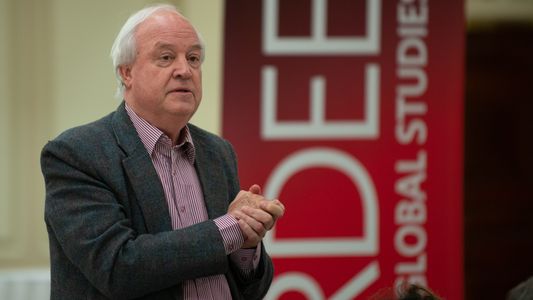
Amb. Jorge Heine
Heine notes that despite these challenges, a diverse group of candidates has entered the race to succeed current Secretary-General António Guterres. The election process has become more transparent in recent years, requiring candidates to publicly present their visions for the organization’s future. Yet the decisive influence remains with the five permanent members of the UN Security Council, each of whom holds veto power. As Heine observes, the selection process has historically been shaped as much by great-power politics as by the qualifications of the candidates themselves.
A central theme of Heine’s analysis is the growing expectation that the position should go both to a woman and to a representative from Latin America, a region that has been historically underrepresented in the organization’s top leadership. He highlights several leading candidates while assessing their political strengths and vulnerabilities.
Of the broader contest, Heine argues that finding a leader with the vision and experience necessary to reform the organization is especially important given the magnitude of the challenges ahead. As he writes, the UN secretary-general’s position has long been described as the world’s “most impossible job,” a characterization that feels particularly apt at a moment when the institution faces both financial strain and questions about its future role in global governance.
Ultimately, Heine’s article raises a broader question: what type of leadership is needed to guide the UN through a period of growing international fragmentation? While some candidates may be viewed as politically safe choices who are unlikely to “rock the boat,” Heine suggests that managing an organization in crisis may require more than caution. The next secretary-general, he argues, will need the experience, vision, and political skill to navigate an increasingly divided world while preserving the relevance of the international system’s most important multilateral institution.