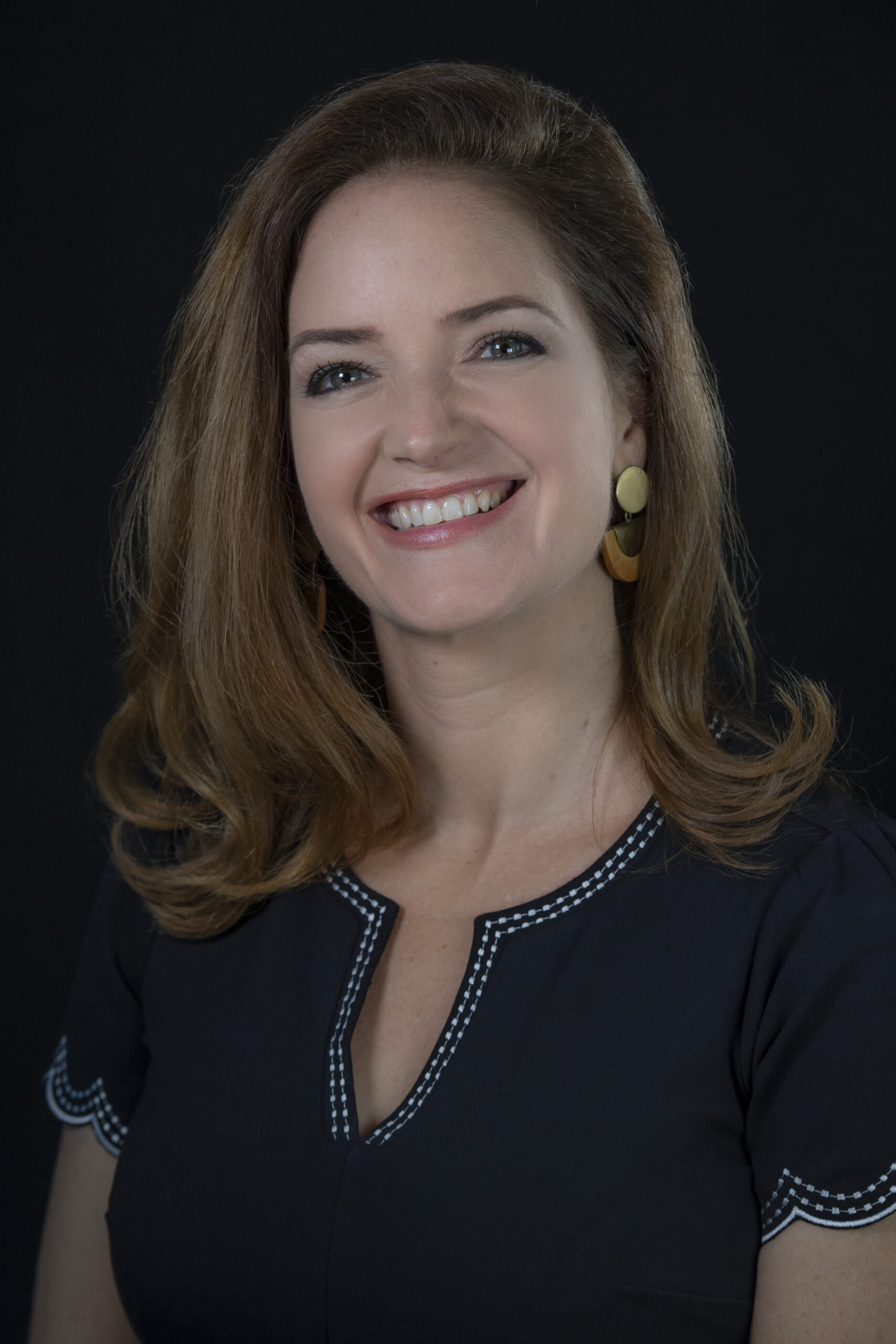

Reaching the Girls Too Often Missed: A Q&A with Dr. Xanthe Scharff
When conflict or disaster forces families from their homes, girls face distinct and often overlooked risks, from losing access to school to early marriage and threats to their safety. Dr. Xanthe Scharff, President and CEO of the Women's Refugee Commission (WRC) and a graduate of The Fletcher School at Tufts University, has spent her career working to make sure girls are seen and heard.
To mark International Day of the Girl on October 11, APSIA asked Scharff about the challenges displaced girls face, how her graduate education shaped her work, and what students should understand about careers in girls’ rights and protection.
What do you wish more people understood about the challenges girls face when they are displaced by conflict or crisis?
The displaced girls facing the greatest risks are often the least likely to be reached by humanitarian programs: girls who are out of school, married or caring for children, living with disabilities, separated from family, or unable to move freely because of safety concerns.
I’m proud to share that WRC has worked to counter this problem. Our I’m Here methodology asks humanitarian actors to find girls who are being missed, listen to them, and design programs with them rather than assuming we already know who they are and what they need. An example is our recent research from Cox’s Bazar on safe spaces for women and girls among the Rohingya refugee community. I was deeply moved by the importance of these spaces to girls. Sometimes these were the only places they felt safe.
How did your graduate education at Fletcher shape your approach to this work?
While a master’s student at Fletcher, and thanks to the Fletcher network, I went to Malawi to intern with CARE. Thanks to another Fletcher graduate, I had the opportunity to write an article for the Christian Science Monitor about a rural girl who was not attending 8th grade, while her older brother continued in 11th grade. The girl, Anesi, inspired readers to send money to help girls like her get back into school.
I worked with Malawian colleagues, and with a team of volunteer students from Tufts and Fletcher, to set up the nonprofit Advancing Girls’ Education in Africa, which is still running today and reaching girls throughout the country with radio programming and scholarships. Fletcher professors helped us figure out how to launch the nonprofit, and Fletcher and Tufts supported our early work with grants.
I later founded The Fuller Project, the global newsroom dedicated to women and girls, building on the applied lessons in social entrepreneurship that I learned at Fletcher. Today, as the CEO of Women’s Refugee Commission, I draw on these practitioner skills, but I also draw on lessons in human security and humanitarian response.
As a doctoral student, I worked for the UN in Khartoum, traveled throughout South Sudan, and did extensive research and advisory work in northern Uganda after 20 years of civil war. My professors and coursework prepared me to analyze development and humanitarian aid systems and to make contributions to ensure that women and girls are better centered.
What would you want students interested in girls’ rights and protection to understand about working in this field?
We are in the midst of a very sad moment of reckoning when it comes to international aid and partnerships for women and girls, given the drastic cuts to government aid and an even earlier drawback in institutional funding to the space. This is in contrast to the sustained, high level of interest in gender studies at Fletcher and in other APSIA schools.
Looking ahead, I think we all need to be entrepreneurial in our thinking about how to bring new people to the global movement for women and girls, how to find meaningful work, and how to craft roles and organizations so that women and girls are not left behind.
The good news is that even as governments and some institutions walk away from gender work, global concern for women and girls is still very strong, and among some communities, even stronger than ever before, because we are having to grapple with the fact that progress needs to be actively protected.
Learn more about the Women’s Refugee Commission and its work supporting displaced women and girls.
This Q&A was conducted and edited by Jade Williams Jones, Engagement Coordinator at APSIA.