
A Conversation with Mayor Mike Johnston at the Axios Denver Newsmakers Event
Published 11/03/2025 - On October 7, 2025, I had the distinct honor of attending the Axios Denver Newsmakers event, hosted by Korbel’s own Scrivner Institute of Public Policy, and sponsored by The Denver Foundation. The event featured an engaging and insightful question-and-answer session with Denver Mayor Mike Johnston, focused on the proposed Vibrant Denver Bond, a five-part, $950 million general bond question that will appear on the November 4, 2025, ballot. Beyond listening to the discussion, I also had the incredible opportunity to speak directly with Mayor Johnston, gaining firsthand insight into how local leaders approach complex policy challenges
The event began with an overview of the proposed bond, setting the stage for an in-depth conversation about how public financing can shape the city’s future, which provided a rare opportunity to hear directly from the mayor about one of the most significant public financing proposals in Denver’s recent history. The Vibrant Denver Bond is designed to fund critical capital improvement projects across the city, addressing infrastructure, housing, and community development needs. Mayor Johnston emphasized that the bond’s five components, affordable housing, transportation and mobility, parks and recreation, public facilities, and economic development, represent strategic investments in Denver’s long-term vitality and inclusivity.
During the conversation, Johnston highlighted the city’s urgent need to expand affordable housing and improve public spaces to maintain Denver’s quality of life as the population continues to grow. He explained that the bond would not increase property tax rates but would instead reauthorize expiring debt, allowing the city to reinvest in essential infrastructure without overburdening taxpayers. This approach, he argued, reflects responsible fiscal management while ensuring the benefits of growth are broadly shared.
Following the bond discussion, the audience was given the opportunity to ask questions, which touched on issues such as homelessness, climate resilience, and economic equity. Mayor Johnston spoke candidly about balancing Denver’s rapid development with sustainability and social responsibility. He stressed the importance of public engagement and voter participation, noting that every Denver resident has a stake in shaping the city’s future.
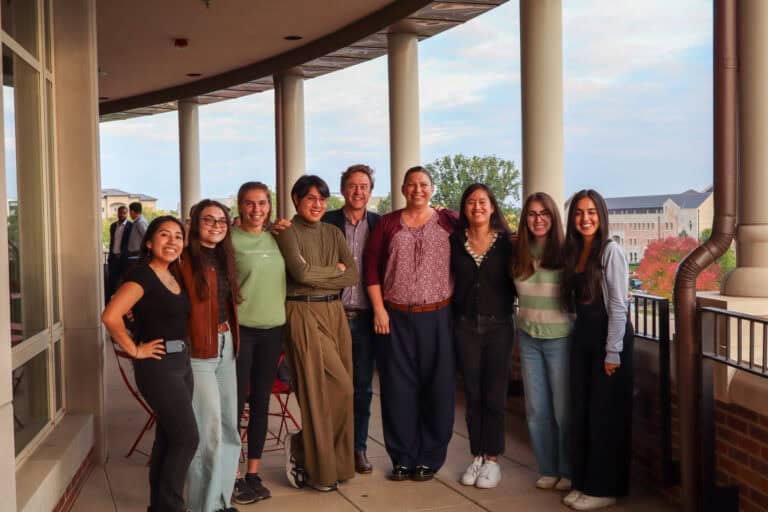
This event truly reflected the civic spirit of collaboration between local government, academic institutions, and philanthropic organizations. Axios Denver’s format, focused, conversational, and journalistic, allowed thoughtful dialogue rather than scripted speeches. This approach ultimately led myself and several other graduate students having the unique opportunity to speak one-on-one with Mayor Johnston about the upcoming ballot issues and other pressing policy issues affecting Denver and the state of Colorado.
Mayor Johnston spoke openly and enthusiastically with us about everything from our future career goals to local development projects, including plans for the new Mile High Stadium and its role in Denver’s economic and recreational growth.
As a Public Policy student, I spend much of my time studying elected officials, their policies, and their impact on society, but I never expected to speak face-to-face with one. Korbel made that possible by facilitating these conversations with the mayor. His friendly, down-to-earth demeanor quickly put our group at ease, and as we stood on the Sie Complex balcony chatting as equals, it struck me that elected officials are, at their core, people like us. That moment brought to life what our work in public policy is all about: creating meaningful connections and striving, regardless of affiliation, to make our communities stronger and more equitable.
For me, attending the Axios Denver News Makers event was both informative and inspiring. It underscored the importance of civic participation and policy literacy, reminding attendees that democracy functions best when communities are informed and engaged. As Denver prepares for the upcoming vote, the discussion served as a timely reminder that the city’s growth and vibrancy depend on the collective choices of its residents. For me, as a student, it was a rare chance to witness these principles in action and to see firsthand how public policy shapes real communities, and it was a reminder that our studies are not just theoretical but are preparing us to actively contribute to the future of the city and the world around us.